
Can nuclear deterrence and disarmament go hand in hand? Evidence from 24 countries shows they do

Can nuclear deterrence and disarmament go hand in hand? Evidence from 24 countries shows they do

Nuclear deterrence and disarmament do not necessarily need to go against each other. A new paper by Lauren Sukin and colleagues shows many people hold both pro- and anti-nuclear views. Using survey data from 24 countries (N=27,250), the study finds publics value both deterrence and disarmament rather than categorical positions.

New paper on grand strategic change after critical situations: Cases of Israel and Czechia

New paper on grand strategic change after critical situations: Cases of Israel and Czechia

Zuzana Lizcová & Rob Geist Pinfold’s article in EJIS explores whether grand strategies and strategic narratives endure or shift after traumatic geopolitical shocks. Comparing Israel’s response to 7 October 2023 with Czechia’s reaction to Russia’s 2022 invasion of Ukraine, it finds that the scale of strategic change reflected the severity of perceived threat and disruption.

PRCP Annual Review 2025

PRCP Annual Review 2025

At the PRCP, 2025 will likely be remembered as a year that was busy, challenging, but also rewarding in many different ways. Having published more than 25 peer-reviewed articles in prestigious journals alongside many working papers and policy briefs while also providing more than 1300 media interviews and commentaries, we hope to have contributed greatly to both academic and public security discussions. See our Annual Review 2025 here.

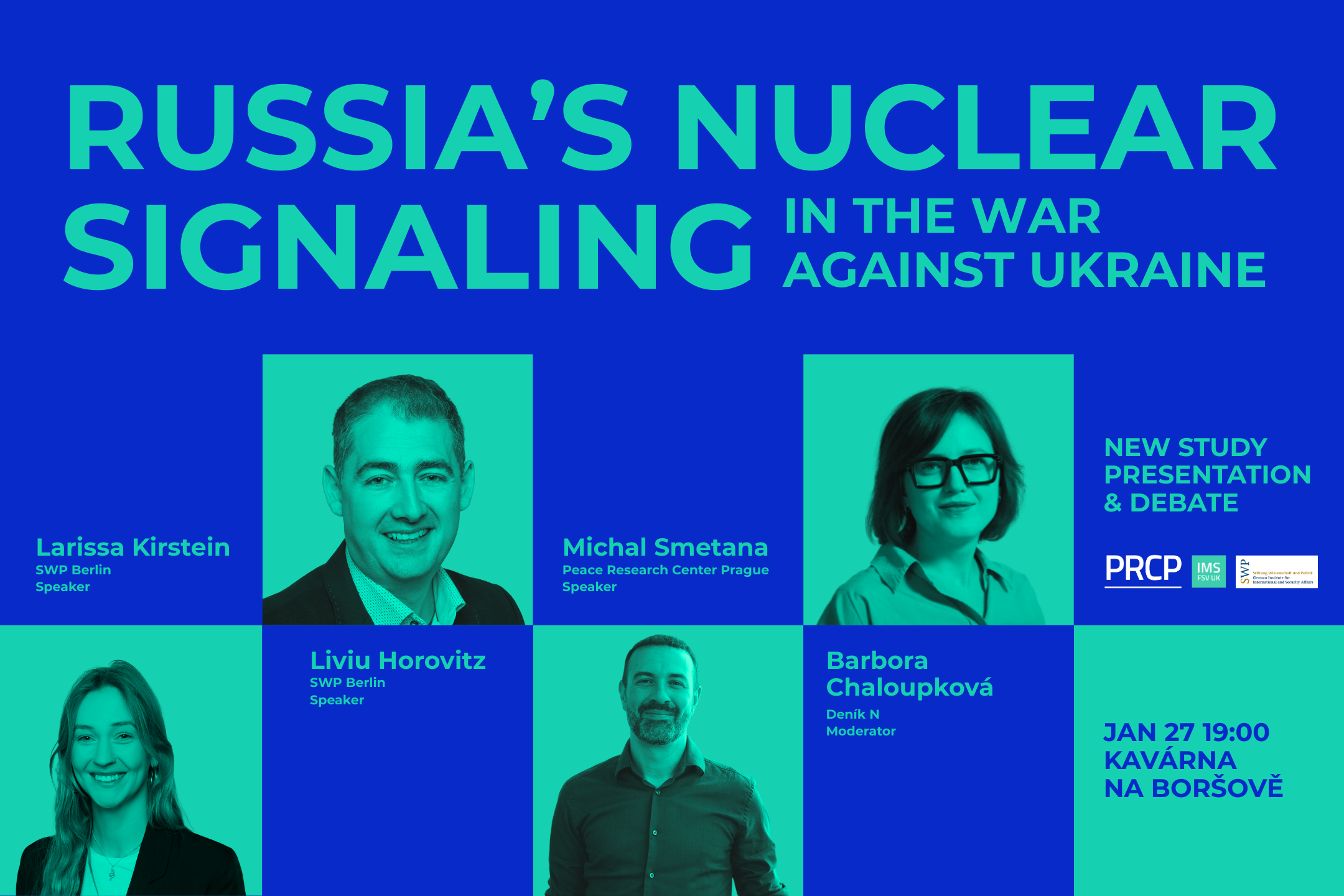
Russia's Nuclear Signaling: Register for New Study Presentation & Debate

Russia's Nuclear Signaling: Register for New Study Presentation & Debate

Most Russian nuclear messaging during the war in Ukraine has not been about explicit nuclear threats, but about amplifying uncertainty and fear. The PRCP and SWP have recently published a working paper that systematically tracks this dynamic. Come join us on January 27th at 19:00 in Kavárna Na Boršově where we will introduce the study and discuss it with the authors! Register here.

Our Director Michal Smetana won the Neuron Award for Promising Scientists 2025!

Our Director Michal Smetana won the Neuron Award for Promising Scientists 2025!

Our Director Michal Smetana has won the Neuron Award for Promising Scientists 2025 in the field of social sciences. The jury praised his innovative approach to combining the fields of international relations, security studies, and political psychology, into which he has introduced experimental methods from natural sciences. We sincerely congratulate him on the success!

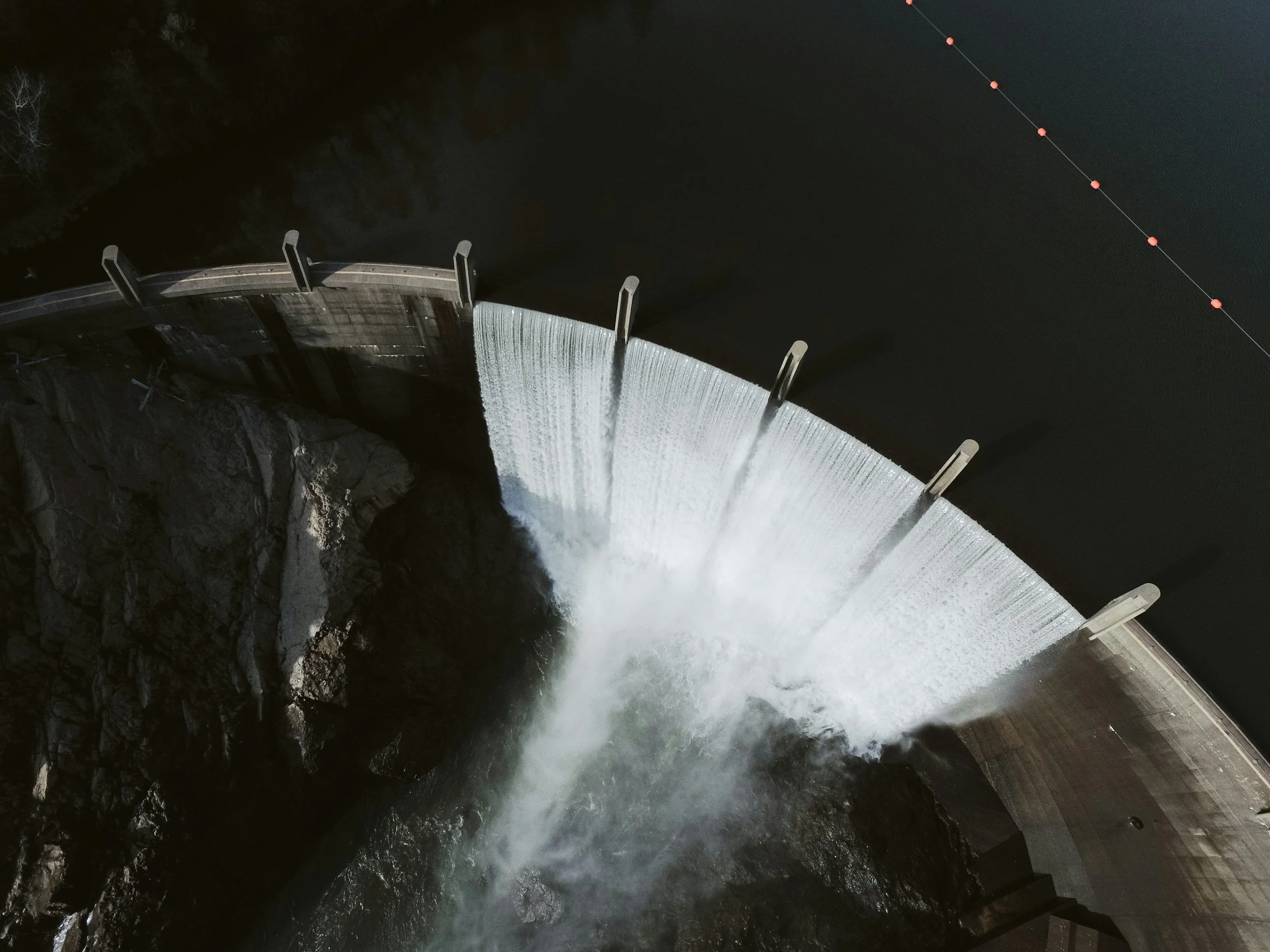
Water as a weapon: New article on U.S. advocacy to prohibit water weaponization

Water as a weapon: New article on U.S. advocacy to prohibit water weaponization

Despite water infrastructure being legally protected under international law, states have used it as a weapon in armed conflict. Eliška Pohnerová’s article explores how the United States advocate for the prohibition of water weaponization in three armed conflicts. Results show that water norms are in practice closer to humanitarian crisis prevention than a deterrence mechanism.

Series of policy briefs in response to scholarly article “Atomic Responsiveness”

Series of policy briefs in response to scholarly article “Atomic Responsiveness”

In November 2025, PRCP researchers alongside Stephen Herzog (Middlebury Institute of International Studies at Monterey) published “Atomic responsiveness” in the European Journal of International Security. The article sparked an academic exchange with Florian Eblenkamp (ICAN). This Policy Brief series presents his response and Herzog’s rejoinder.